Challenging Audiences’ Perception of History
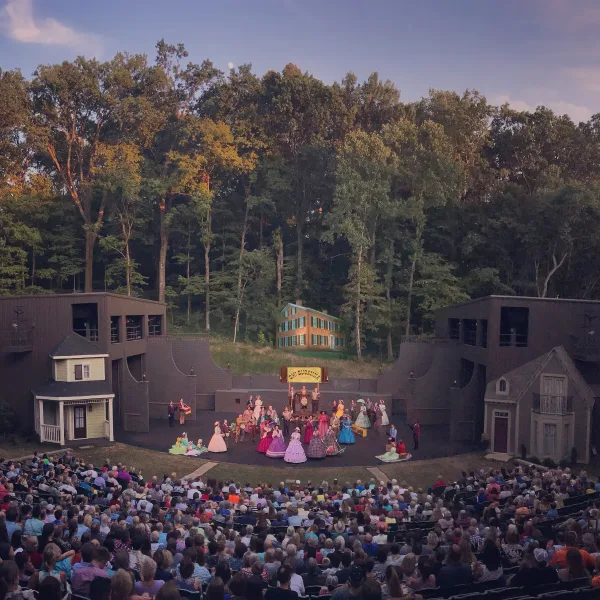
The Stephen Foster Story, written by Pulitzer Prize winning Playwright Paul Green, is an outdoor symphonic drama based on the life and music of American composer Stephen Collins Foster. The show premiered in 1959 and has played at My Old Kentucky Home State Park in Bardstown, KY for 66 years.
The play is set in 1850 Pre-American Civil War Pennsylvania and Kentucky. This work of historical fiction utilizes Foster’s songs and elements of his history to create a story of love, family and community.
The story presents many difficult realities that were true of the time period.
It is notable that Foster wrote songs during a time when people of African descent were enslaved in America. Many of his songs were written about people of color and their experiences, witnessed by him during this period of American History. Some of his songs were performed in Black-face minstrel shows across the United States. This horrible entertainment practice featured Caucasian actors with painted faces depicting negative caricatures of Black people – both enslaved and freed – in America.
Stephen Foster’s lyrics, however, depicted people of color with humanity, dignity and heart.
His “Nelly Was A Lady” is an example of a song and lyric that described a woman of color with dignity and using the term lady typically reserved for white women.
In his 1855 “My Bondage and My Freedom,” abolitionist luminary Frederick Douglass, himself formerly enslaved, wrote that the song “My Old Kentucky Home, Goodnight“ awakens sympathies for the slave in which anti-slavery principles take root, grow, and flourish.
This belief that Foster’s music, though sold for use in minstrel shows and featuring vernacular of the time period that today we consider to be racist in nature, presented people of color in such a way as to bring humanity to their depiction, is the foundation on which the Artistic Staff of The Stephen Foster Story build a production each summer that features themes that are as valuable to explore today as they were when Foster and Green wrote in the 1850s and 1950s, respectively.
The work of producing such a piece for a modern audience involves careful reflection of past depictions and the knowledge that storytelling and staging choices made for an audience in the 1960s may not be the right choices for today. Providing proper historical context for audiences, actors and artistic/production staff has been a key factor in confidently producing a show set in such a difficult period of American History. Elements such as thoughtful advertising, costume design, digital history guides, lobby cards and brave conversation have helped The Stephen Foster Story staff bring greater value to this storytelling. The most important action taken by the team is to ensure that Black voices are always leading and participating in conversations and decision making.
Executive Artistic Director, Johnny Warren reflects on the work, saying “Not everyone feels comfortable participating in the onstage depiction of people of African descent who were enslaved in our country, and acknowledging that truth is our first step toward responsibly telling this story. That is ok. We need to meet people where they are. Race history is a topic that is often used to divide Americans, so of course many are uncomfortable with it. Our goal is to bring people together through this storytelling in a way that spotlights the reality that this history is our history…all of us.”
Angela Crenshaw, recent Chair of The Kentucky African American Heritage Council and Stephen Foster Story cast member says of performing in the show “I am grateful for the opportunity to honor my ancestral mother through depicting a person who was enslaved. It is a gift and an honor to tell stories that are often overlooked.”
The Playmaker, a documentary film written and directed by Foster cast member, Hannah Bowman, has become an important tool to help provide context for artistic staff members. The film describes a visionary American playwright in the mid-1900s whose Human Rights activism informed his writing. His desire for equitable treatment of all people led to The Stephen Foster Story serving not as a love-letter to the Antebellum South, but as a window into a time period and its people who were living out many of the same hardships that we continue to wrestle with today. His script has served as a framework that has allowed the show to engage with difficult historical realities responsibly.
“I grew up in Bardstown as a superfan of the show. I was very interested in learning the ‘why and how’ about the person who wrote it. I learned that he wanted to write about people,” says Bowman.
“Storytelling is one of the ways that we connect with our past,” says Foster Assistant Director, Donna Phillips, “and if we don’t connect and engage with our past, we as human beings are apt to repeat the same mistakes.”
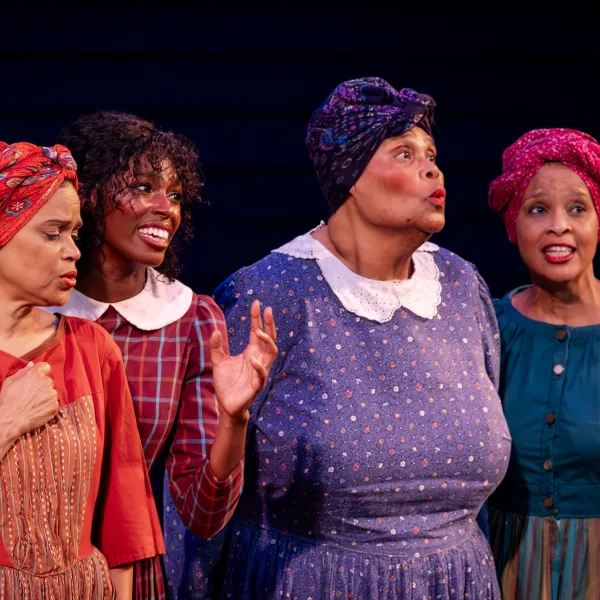
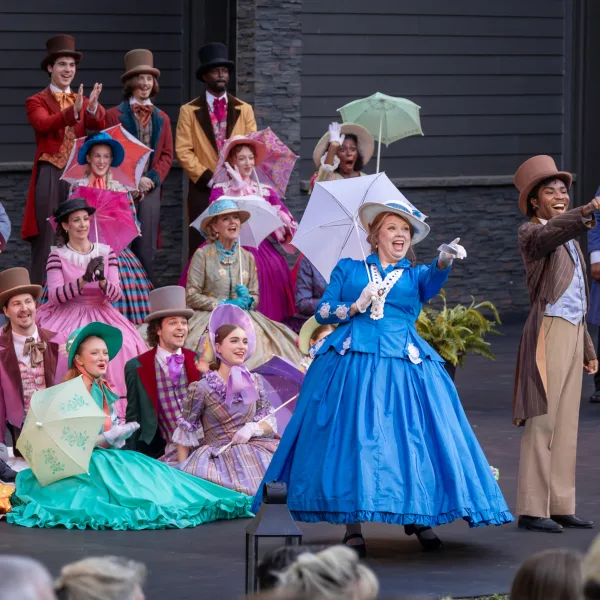
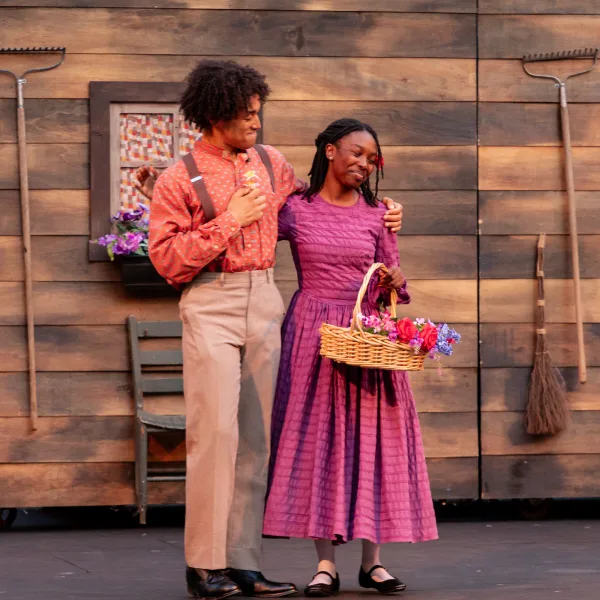
The Stephen Foster Story’s show staff continues to evaluate and work toward the most responsible way to bring this story to the stage. Some of their focus has included moving costume and performance styles away from anything that resembles the stereotypes depicted in media such as Gone with the Wind and the inclusion of new scenes and characters that more fully depict Black life in Pre-Civil War America. An example of their work is the research that led to the inclusion of the historic character Martin Delany. Delany was a contemporary of Frederick Douglass and a true American medical, literary, and military hero who is known as the father of Black Nationalism.
The Foster team’s current process is built on open conversation with company members and the belief that these tough topics are worth exploring and sharing with audiences. Phillips, who serves as Assistant Director and who is also a marriage and family therapist, introduced the concept of creating a brave space rather than a safe space for conversations about race history. Indicating that it is unrealistic to expect all people to feel “safe” in spaces that are predominantly white, a more honest method is to support one another in engaging bravely in difficult conversation. Company leadership acknowledges that the “fear of offending someone” often keeps us from talking about matters such as race history and models conversation in the hope of relieving that fear.
“We find joy in striking a responsible balance between preserving a relic of the past and using it as a tool to connect with modern cultural conversation.” says Warren of producing a long-running show. “As has been true through the history of staging this show, the choices that we believe are right and responsible today may not be right five years from now. It is crucial that we keep our mind toward evaluating how our directors, actors, and audiences receive this piece of theatre and that we always do the work to honor people whose stories were immortalized in Foster’s songs.”
Since its inception, the production has been revised and adapted over time in an ongoing effort to present the material with fairness, sensitivity, and historical awareness, reflecting our developing understanding of this history and its legacies.
Article submitted by The Stephen Foster Story staff as a recap of and reflection on a session presented at the National Conference on Outdoor Theatre. Production photos are included as an example of photos used in presentation to demonstrate progress in bringing Black voices into prominence. Pictured here are panelists Donna Phillips, SFS Assistant Director, Cast Member, Angela Crenshaw, SFS Cast Member/Consultant , Hannah Bowman, SFS Cast Member/Filmmaker.