Cultivating Community with Affinity Nights

A few years ago, I attended a New Works festival as an industry guest artist, offering feedback from my perspective as an actor. One piece in particular stood out. It was an experimental performance that began with femme-presenting and non-binary actors warming up onstage. As the piece progressed, they removed layers of clothing and then directly addressed the white, cisgender, male-identifying audience members, demanding them to leave the space. As those individuals exited the room, including my husband, I noticed something unexpected. Tension released from my body. My mind quieted. A sense of ease settled over the room. It was my first conscious experience of what it felt like to engage with performance art in a space composed entirely of womxn and non-binary people.
I realized then that I had not been in a room exclusively for womxn since my teenage years in evangelical church culture. Those spaces often centered on shame and guilt, particularly around sex and sexual thoughts outside of marriage as sin. There were also sleepovers, where friends and I stayed up late talking and laughing, watching the sun rise through the blinds before finally sleeping until noon to recover from a 4 a.m. bedtime. None of these centered around experiencing performance art together without being concerned what our male counterparts were experiencing.
Being in a room with others who share a significant identity factor, whether gender, sexual orientation, culture, nationality, language, or other lifestyles can have a profound and affirming impact. This is especially true for individuals who are underrepresented in media and the arts. At that New Works festival, I experienced something special. While the goal of theatre is often to bring together audiences of all kinds, there is something uniquely restorative about intentionally creating space for communities who are accustomed to code-switching, self-monitoring, or minimizing their uniqueness to maintain balance in mixed rooms. For those who often feel unseen, such experiences can be deeply meaningful.
Affinity Nights are one way theatres can offer these opportunities. Across the United States, theatres have been hosting Affinity Nights for at least a decade, with many organizations expanding their efforts after 2020 brought heightened awareness to issues of representation and inclusion. These events are designed to welcome audiences who share a particular identity and to create an environment where they can experience art collectively.
One company leading this work in the Southeast is Signature Theatre in Arlington, Virginia. I had the opportunity to speak with Ethan Heard, Signature’s Associate Artistic Director and Co-Chair of their Anti-Racism and Equity Working Group, about their approach to Affinity Nights “Signature was founded in 1989,” Heard explained. “We’re especially known for our intimate productions of musicals and new plays. We have two reconfigurable black box theatres, one seating 300 and one seating 100, and we want people from all backgrounds and walks of life to feel welcome in our space.” Heard shared that Signature had already been hosting Pride Nights for each production, complete with post-show receptions featuring food and drink. “We decided to go beyond our usual marketing efforts and host additional Affinity Nights for productions such as King of the Yees, In the Heights, Private Jones, Play On!, Soft Power, and Fiddler on the Roof.”
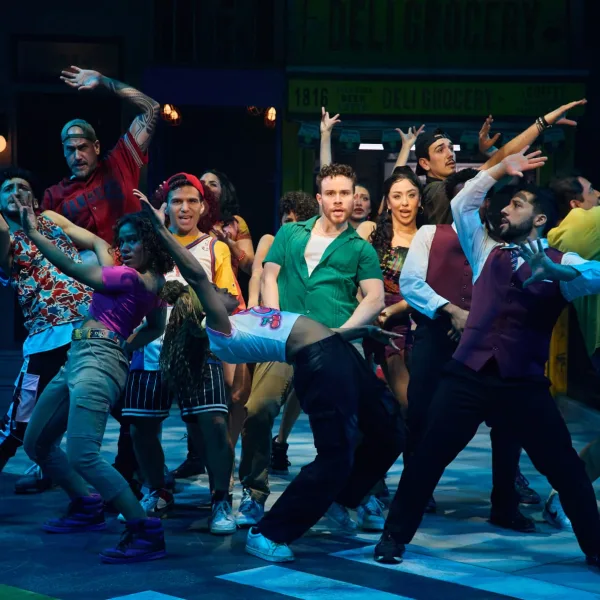

For the Signature team, Affinity Nights serve multiple purposes. “They’re a way of showing BIPOC and LGBTQIA audiences that Signature is a joyful and welcoming place to experience theatre,” Heard said. “They help us grow our audience, and they create memorable moments for both artists and patrons.”
He also emphasized how closely these events align with Signature’s mission. “Our work is grounded in collaboration, communication, and connection. Affinity Nights allow us to partner with local organizations and build genuine relationships with community groups.”
At their core, Affinity Nights are about cultivating community. “People have many entertainment options,” Heard noted, “and some folks don’t even know about Signature Theatre yet.” These events allow the company to extend targeted invitations and offer customized experiences that resonate with specific communities. Theatre staff and cast members attend post-show receptions, fostering meaningful connections with audience members. Signature frequently collaborates with local musicians, food vendors, ASL interpreters, drag performers, and other artists to create these intentional gatherings.
For those who may be skeptical of Affinity Nights, Heard offered a simple suggestion: “Give them a try.” Like any initiative, their success depends on how well they align with a theatre’s mission, community, and resources. When thoughtfully executed, Affinity Nights can create spaces of belonging and joy. As demonstrated by Signature Theatre, they offer a powerful way to strengthen connection and deepen our collective engagement with the arts. To learn more about Signature Theatre, visit their website: https://www.sigtheatre.org/