Pages to Performance: Playwrights Building Community at SETC
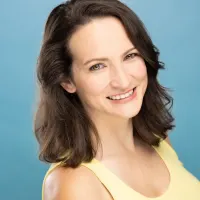
The first time a playwright walks into a conference like SETC, there’s often a quiet question sitting just beneath the surface: Is there a place for me here? For years, the Southeastern Theatre Conference has been a cornerstone for actors, directors, designers, and educators, a place where careers begin and networks expand. However, for playwrights, the experience hasn’t always been as clearly defined. Now, that is beginning to change, and for Maryland playwright Marshall Logan Gibbs, that change has been tangible.
“This year was my second time attending the conference, and my first year attending as a speaker,” says Marshall Logan Gibbs. Their relationship with SETC didn’t begin there, though. Like many theatre artists, they had known about it long before they had ever stepped into the space. “I grew up hearing a lot about it when I was in high school theatre, but unfortunately I never had a chance to go until much later - just last year in fact, when the conference came to my hometown of Baltimore, MD - and I am so glad I came! I don’t plan to ever miss it again.”
Gibbs arrives at SETC not just as an attendee, but as a working playwright actively building a career. “I have two published plays by 1319 Press and Next Stage Press, my most notable being MONSTER (OR #METOO, BRUTE) which is a retelling of Julius Caesar as an online influencer,” they said. “My work has been selected for the Valdez Theatre Conference, Midwest Dramatists Conference, and Baltimore Playwrights Festival, among others.”
Their work as a playwright is deeply intertwined with their work as an educator. “I am a full-time writer and teaching artist, so when I am not writing plays, you can find me directing youth theatre or teaching performing arts classes in Maryland.” It’s a balance that makes spaces like SETC especially valuable, not just as a place to present work, but as a place to connect, teach, grow, and learn. But that value didn’t fully reveal itself right away.
Gibbs’ first year at SETC offered glimpses of what could be possible—but also revealed the gaps that still existed for playwrights. “My first year attending (2025) there unfortunately wasn’t a lot that the conference had to offer for playwrights,” they said. “There was of course the Getchell New Play Award, The 24 Hour Play Fest, and there were two awesome workshops taught by Bob Bartlett, and both were well worth attending! But other than these two sessions there wasn’t much else for SETC Playwrights in terms of workshops and education.”
Even within those limitations, something important happened: they made their own opportunity. “I still made the most of what the conference did have to offer: namely, the fringe festival, where we put on a production of my one act play: My Daughter’s a Demon.” That experience became a kind of entry point, not just into the conference, but into the possibilities it holds for playwrights willing to take initiative. If you are a theatre-maker interested in self-producing, the SETC Fringe Festival is a great way to get involved,” they shared. “If you and friends are already coming to the conference and you have a short play that’s ready to see a stage - the fringe is a fantastic opportunity just waiting for you. I definitely recommend it!”
By the time Gibbs returned the following year, something had shifted. “This year, there were certainly a lot more workshops for playwrights!” they shared. “So many topics were covered, from How to Start Writing to Revising/Editing to I’ve Written a Play Now What Do I Do?! There were workshops for a variety of different experience levels, too, so there truly was something for everyone.” It wasn’t just the increase in programming; it was the range. The sense that playwrights at different stages of their journey were being welcomed and supported. Then, there were the moments that couldn’t be scheduled. “My favorite part of the conference were the hallway conversations… getting to meet and chat with so many creative theatre-people all in one place, including friends I’ve only known via the Internet before - getting to meet and conference with them and with all of the student playwrights that attended my workshops was just fantastic.”
They focused on what that meant in practice: “I left feeling like I made a lot of new friends and that is a great feeling.” This year, Gibbs wasn’t just attending those conversations; they were leading them. “I had two [workshops] and they went very well!” they said. The first, Self Marketing for Playwrights, addressed a question that hovers over nearly every emerging writer’s career: How the heck do I get my work staged? “My first was Self Marketing for Playwrights, and it was all about how to build a presence for yourself as a playwright online and find opportunities to get your work staged,” they explain. “The first was more well-attended and actually went over time because of the great conversations we were having in the room—and I think that this is a testament to the fact that this workshop was covering the question that every playwright really wants to know.”
What they heard from the students in the room confirmed it. “From talking with dozens of students that attended this session, it seems clear to me that this is the hurdle a lot of playwrights face early in their career. They’ve written, they’ve revised, but now they want their play to be performed!” Their second workshop, Writing Modern Adaptations of Classic Plays, offered a different kind of entry point—one rooted in craft, structure, and creative exploration. Together, the two sessions reflected what playwrights need most, both the how and the what next.
Even as the presence of playwriting grows at SETC, Gibbs is clear-eyed about what could come next. “Well, I have a nitpick, but one that I think is important enough to address,” they said. “On Whova and the schedules for all of the programming… Directing and Playwriting workshops and events are listed together. As in the category was ‘Directing/Playwriting.’ I really would like to see the distinction between these two very different paths clear.” It’s a small detail, but a meaningful one. Naming something clearly is often the first step in recognizing its importance.
Beyond that, they imagine something more expansive—a space not just for attending, but for creating in real time. “I also think it would be nice to have a dedicated space to work on writing and to share work with one another,” they suggested. “A casual room that playwrights can come to throughout the conference to workshop their writing, hear their work aloud, and have discussions with the other attending playwrights.” It’s an idea rooted in community, and in the understanding that playwrights don’t just need platforms; they need rooms. “A dedicated community space like this could be very helpful and a fantastic resource to SETC playwrights. I heard other playwrights who have been attending SETC for much longer than I have reminiscing about how this was something SETC used to offer, but doesn’t anymore. So there is some history to this!”
The word community comes up again and again, not as a buzzword, but as something actively built. Something that requires presence, participation, and a willingness to show up—not just for your own work, but for others’. “We playwrights are a small but mighty bunch - and it’s at places like SETC where we sharpen our community and make lasting connections.” There is something powerful in that framing. Small, but growing; mighty, not in scale, but in intention. For young playwrights considering SETC, the opportunity is not just in what already exists, but in what is still taking shape. The fringe festival is there, waiting for new work, workshops are expanding, reaching writers at different stages, and conversations are happening in hallways, sessions, or the spaces between. Perhaps most importantly, playwrights themselves are showing up, bringing their work, their questions, their ambition, and their willingness to build something together. Gibbs felt that shift firsthand. “I loved getting to meet so many people this year and I look forward to another great conference in 2027!”
Somewhere right now, there is a playwright with a draft open on their laptop that they’ve written, they’ve revised, and they’re wondering what will come next. SETC is becoming one answer to that question. Not a final destination—but a place to expand and grow. A place to test ideas. A place to meet collaborators. A place to step out of isolation and into community. For those willing to take that step, the room is getting bigger, one playwright at a time.